In this Sunday, May 29, 2011 file photo, Jeff Glazer guides his allergy-sniffing dog, Riley, through a dugout of a ball field before his team's baseball game in Middlebury, Conn. Riley accompanies Jeff to ensure there are no peanut products or residue that could trigger his life-threatening allergic reactions. (AP Photo/Jessica Hill)
In this Sunday, May 29, 2011 file photo, Jeff Glazer guides his allergy-sniffing dog, Riley, through a dugout of a ball field before his team's baseball game in Middlebury, Conn. Riley accompanies Jeff to ensure there are no peanut products or residue that could trigger his life-threatening allergic reactions. (AP Photo/Jessica Hill)
NEW YORK (AP) ? Parents are reporting more skin and food allergies in their children, a big government survey found.
Experts aren't sure what's behind the increase. Could it be that children are growing up in households so clean that it leaves them more sensitive to things that can trigger allergies? Or are mom and dad paying closer attention to rashes and reactions, and more likely to call it an allergy?
"We don't really have the answer," said Dr. Lara Akinbami of the Centers for Disease Control and Prevention, the senior author of the new report released Thursday.
The CDC survey suggests that about 1 in 20 U.S. children have food allergies. That's a 50 percent increase from the late 1990s. For eczema and other skin allergies, it's 1 in 8 children, an increase of 69 percent. It found no increase, however, in hay fever or other respiratory allergies.
Already familiar with the trend in food allergies are school nurses, who have grown busier with allergy-related duties, like banishing peanuts at school parties or stocking emergency allergy medicine.
Sally Schoessler started as school nurse in 1992 in New York state, and didn't encounter a child with a food allergy for a few years. But by the time she left school nursing in 2005, "there were children in the majority of classrooms" with the disorder, said Schoessler, who now works at the National Association of School Nurses in Silver Spring, Md.
Food allergies tend to be most feared; severe cases may cause anaphylactic shock or even death from eating, say, a peanut. But many food allergies are milder and something children grow out of. Skin conditions like eczema, too, can be mild and temporary.
It's been difficult getting exact numbers for children's allergies, and the new report isn't precise. It uses annual surveys of thousands of adults interviewed in person. The report compares answers from 1997-1999 to those from 2009-2011.
Parents were asked if ? in the previous year ? their child had any kind of food or digestive allergy, any eczema or skin allergy, or any kind of respiratory allergy like hay fever.
The researchers did not ask if a doctor had made the diagnosis or check medical records. So some parents may have been stating a personal opinion, and not necessarily a correct one.
"We see a lot of kids in clinic that really aren't" allergic to the foods their parents worry about, said Dr. Morton Galina, a pediatric allergist at Atlanta's Emory School of Medicine.
For example, hives are sometimes blamed on a certain food when a virus was the actual cause, he added.
But experts also said they believe there is a real ? and unexplained ? increase going on, too.
One of the more popular theories is "the hygiene hypothesis," which says that exposure to germs and parasites in early childhood somehow prevents the body from developing certain allergies.
The hypothesis argues that there is a downside to America's culture of disinfection and overuse of antibiotics. The argument has been bolstered by a range of laboratory and observational studies, including some that have found lower rates of eczema and food allergies in foreign-born children in the U.S.
There could be other explanations, though. Big cities have higher childhood allergy rates, so maybe some air pollutant is the unrecognized trigger, said Dr. Peter Lio, a Northwestern University pediatric dermatologist who specializes in eczema.
Some suspect the change has something to do with the evolution in how foods are grown and produced, like the crossbreeding of wheat or the use of antibiotics in cattle. But Lio said tests haven't supported that.
Emory's Galina said the new CDC statistics may reflect a recent "sea change" in the recommendations for when young children should first eat certain foods.
In families with a history of eczema or food allergies, parents were advised to wait for years before introducing their young children to foods tied to severe allergies, like peanuts, milks and eggs. But professional associations changed that advice a few years ago after research suggested that allergies were more likely in those kids when the foods were delayed.
The old advice "was exactly the wrong thing to do," and could have contributed to some of the increased cases, Galina said.
The CDC report also found:
? Food and respiratory allergies are more common in higher-income families than the poor,
? Eczema and skin allergies are most common among the poor.
? More black children have the skin problems, 17 percent, compared to 12 percent of white children and about 10 percent of Hispanic children.
The mother of a 13-year-old girl, who is black, runs an eczema support group in suburban Washington, D.C. Renee Dantzler says roughly half the families in her group are African-American. Eczema is an itchy skin condition, which often occurs on the arms or behind the knees. The cause isn't always clear.
Her daughter, Jasmine, started getting rashes at 6 months and got much worse when she was 4.
"Her whole body would flare. If she ate something, you would kind of hold your breath," Dantzler said. "And she's allergic to every grass and tree God made."
Her daughter took to wearing long sleeves and pants, even in hot weather, so people wouldn't see her skin scarred ? and whitened in spots ? from scratching. She began to improve about four years ago with steroid creams and other treatments and has gradually become less self-conscious about her skin, Dantzler said.
She's now on a school track team, which means wearing shorts.
"She's the only one on the team with long socks," her mom said.
LOS ANGELES (Reuters) - Award-winning comedy "The Office" is hoping to get an extra-long episode for the series finale later this month, but Steve Carell's bumbling office manager Michael Scott won't be joining the farewell party, the producer of the TV comedy said on Wednesday.
Greg Daniels, executive producer of the U.S. mockumentary workplace comedy, said the May 16 finale will be patterned after the original British version, in which the characters reunited after becoming famous as reality TV stars.
"After attempting to beat that (British) ending in a number of different ways, we ended up doing something very similar," Daniels told reporters on a conference call, adding that he was hoping to stretch out the finale beyond its scheduled one-hour running time.
"We are trying to get more time and the network (NBC) is being very creative about scraping some more time without us having to start the finale at a weird time that will cause half the audience to miss the first 10 minutes.
"We are still hopeful of getting slightly more than one hour," he said.
The U.S. version of "The Office," which was originated by British comedian Ricky Gervais, is coming to an end after eight years. Since the departure of Carell in 2011, audiences have fallen from around 8 million at the show's height in 2007-8 to about 5 million this year.
"I think Steve felt, and I agree, that the 'Goodbye, Michael' episode was his goodbye and he didn't want to overshadow the ending that all the other characters deserved," said Daniel.
Recent episodes of the four-time Emmy Award winning comedy have seen friction in the rosy relationship of popular married couple Jim and Pam Halpert, played by John Krasinski and Jenna Fischer.
Daniels declined to give any spoilers but said suggested their future would be largely resolved before the finale.
"My hope is that people will treat the last several episodes as the finale and not force us to do everything in the last episode.
"We didn't want there to be such anxiety over Jim and Pam that you could think of nothing else in the last episode," he said.
NBC is a unit of Comcast Corp
(Reporting By Jill Serjeant; Editing by Cynthia Osterman)
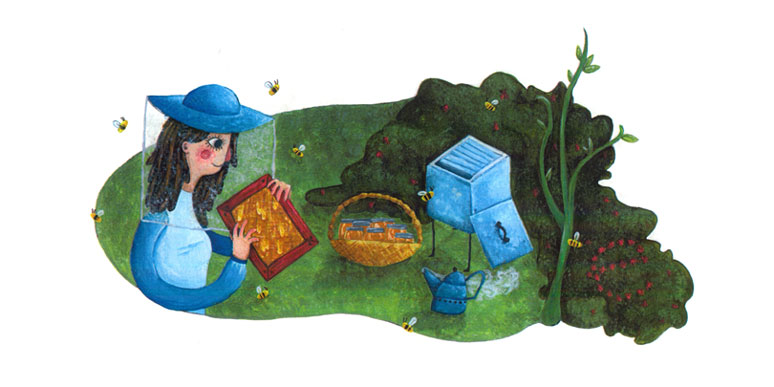
There's little in life finer than pitting youths against each other in battle, which Google's annual "Doodle 4 Google" contest clearly appreciates. The competition takes thousands of Google logo doodle entries and pits them down from thousands to 50, one per US State, and organizes those entries by grade level. The images are then put online for the world to enjoy, as well as to vote on -- out of the five doodles with the highest votes, one national winner is selected, which Google plans on revealing on May 22nd in New York City. This year's theme is "Best Day Ever," which means outdoor activities to one Maine-based middle schooler (seen above), and hanging out with bees to a Michigan-based high school student. Of course, there are 48 other excellent pieces to peek at before casting your vote, though you've gotta get in there before May 10th at 11:59pm ET.
Large genomic study identifies endometrial cancer subtypes, treatment opportunitiesPublic release date: 1-May-2013 [ | E-mail | Share ]
Contact: Caitlin Hool hoolc@mskcc.org 212-639-3573 Memorial Sloan-Kettering Cancer Center
NEW YORK, MAY 1, 2013 Endometrial tumors can be reclassified into distinct subtypes based partly on their genomic makeup and may respond to targeted drugs already being tested in clinical trials, according to a large-scale genomic analysis led by researchers at Memorial Sloan-Kettering Cancer Center and other centers within The Cancer Genome Atlas (TCGA) Research Network.
Published in the May 2 issue of the journal Nature, the findings may help doctors more accurately diagnose endometrial cancer and choose treatments that will target genomic mutations in women with endometrioid and uterine serous adenocarcinomas, the two most common types of endometrial cancer. The findings could also guide clinical trials and the development of new drugs.
"These findings have an immediate therapeutic application, as patients with endometrial cancer can be tested routinely to see whether they qualify for a targeted therapy clinical trial," said Memorial Sloan-Kettering gynecologic oncologist Douglas A. Levine, MD, corresponding author on the study, principal investigator of Memorial Sloan-Kettering's TCGA Tissue Source Site, and Co-Chair of TCGA's Endometrial Working Group. "The current landscape of treatment for endometrial cancer is quite chaotic, and this research may provide order to that landscape, especially for more-aggressive endometrial cancers."
Endometrial cancer, which forms in the tissues lining the uterus, is the fourth leading type of cancer among women and the eighth leading cause of cancer death. Endometrioid tumors are usually less aggressive, while uterine serous tumors are more aggressive.
There has been little agreement among doctors over the best treatment approach following surgery for patients with a high risk of recurrence, with decisions relying largely on a tumor's pathology. However, it is difficult for pathologists to reliably differentiate high-grade endometrioid tumors from uterine serous tumors.
According to Dr. Levine, incorporating new genomic information into treatment planning could be a great leap forward, helping to make certain that additional therapies are used effectively and only when necessary.
The analysis of 373 endometrial tumors showed that approximately a quarter of high-grade endometrioid tumors have certain types of genomic alterations also found in uterine serous tumors. This suggests that a significant portion of endometrioid tumors should be treated more aggressively after surgery.
Many of the tumors analyzed had mutations in important cancer-related genes and pathways for which targeted therapies are already being tested in clinical trials for other cancers. For example, 84 percent of the tumors have some alteration in the PI3 kinase pathway, which is implicated in many cancers. Additionally, genomic alterations in uterine serous tumors share many features with ovarian serous and triple-negative breast cancers, suggesting opportunity for shared treatments.
Investigators at Memorial Sloan-Kettering are now translating these findings into clinically useful tests that may be applied to ongoing and planned clinical trials.
A project jointly funded by the National Cancer Institute and the National Human Genome Research Institute, TCGA is one of the most comprehensive national efforts to collect and analyze the largest set of tumor samples to date using state-of-the-art genomic and molecular techniques. Memorial Sloan-Kettering currently houses one of TCGA's Genome Data Analysis Centers, led by computational biologist Chris Sander, PhD, biocomputing manager Nikolaus Schultz, PhD, and molecular pathologist Marc Ladanyi, MD. For the endometrial cancer study, Memorial Sloan-Kettering contributed more than 10 percent of all tissue samples analyzed.
###
This research was supported by the National Cancer Institute of the National Institutes of Health (NIH) under awards 5U24CA143799-04, 5U24CA143835-04, 5U24CA143840-04, 5U24CA143843-04, 5U24CA143845-04, 5U24CA143848-04, 5U24CA143858-04, 5U24CA143866-04, 5U24CA143867-04, 5U24CA143882-04, 5U24CA143883-04, 5U24CA144025-04, U54HG003067-11, U54HG003079-10, and U54HG003273-10, and supplemented by the Recovery Act.
Memorial Sloan-Kettering Cancer Center is the world's oldest and largest private institution devoted to prevention, patient care, research, and education in cancer. Our scientists and clinicians generate innovative approaches to better understand, diagnose, and treat cancer. Memorial Sloan-Kettering specialists are leaders in biomedical research and in translating the latest research to advance the standard of cancer care worldwide. For more information, go to http://www.mskcc.org.
[ | E-mail | Share ]
?
AAAS and EurekAlert! are not responsible for the accuracy of news releases posted to EurekAlert! by contributing institutions or for the use of any information through the EurekAlert! system.
Large genomic study identifies endometrial cancer subtypes, treatment opportunitiesPublic release date: 1-May-2013 [ | E-mail | Share ]
Contact: Caitlin Hool hoolc@mskcc.org 212-639-3573 Memorial Sloan-Kettering Cancer Center
NEW YORK, MAY 1, 2013 Endometrial tumors can be reclassified into distinct subtypes based partly on their genomic makeup and may respond to targeted drugs already being tested in clinical trials, according to a large-scale genomic analysis led by researchers at Memorial Sloan-Kettering Cancer Center and other centers within The Cancer Genome Atlas (TCGA) Research Network.
Published in the May 2 issue of the journal Nature, the findings may help doctors more accurately diagnose endometrial cancer and choose treatments that will target genomic mutations in women with endometrioid and uterine serous adenocarcinomas, the two most common types of endometrial cancer. The findings could also guide clinical trials and the development of new drugs.
"These findings have an immediate therapeutic application, as patients with endometrial cancer can be tested routinely to see whether they qualify for a targeted therapy clinical trial," said Memorial Sloan-Kettering gynecologic oncologist Douglas A. Levine, MD, corresponding author on the study, principal investigator of Memorial Sloan-Kettering's TCGA Tissue Source Site, and Co-Chair of TCGA's Endometrial Working Group. "The current landscape of treatment for endometrial cancer is quite chaotic, and this research may provide order to that landscape, especially for more-aggressive endometrial cancers."
Endometrial cancer, which forms in the tissues lining the uterus, is the fourth leading type of cancer among women and the eighth leading cause of cancer death. Endometrioid tumors are usually less aggressive, while uterine serous tumors are more aggressive.
There has been little agreement among doctors over the best treatment approach following surgery for patients with a high risk of recurrence, with decisions relying largely on a tumor's pathology. However, it is difficult for pathologists to reliably differentiate high-grade endometrioid tumors from uterine serous tumors.
According to Dr. Levine, incorporating new genomic information into treatment planning could be a great leap forward, helping to make certain that additional therapies are used effectively and only when necessary.
The analysis of 373 endometrial tumors showed that approximately a quarter of high-grade endometrioid tumors have certain types of genomic alterations also found in uterine serous tumors. This suggests that a significant portion of endometrioid tumors should be treated more aggressively after surgery.
Many of the tumors analyzed had mutations in important cancer-related genes and pathways for which targeted therapies are already being tested in clinical trials for other cancers. For example, 84 percent of the tumors have some alteration in the PI3 kinase pathway, which is implicated in many cancers. Additionally, genomic alterations in uterine serous tumors share many features with ovarian serous and triple-negative breast cancers, suggesting opportunity for shared treatments.
Investigators at Memorial Sloan-Kettering are now translating these findings into clinically useful tests that may be applied to ongoing and planned clinical trials.
A project jointly funded by the National Cancer Institute and the National Human Genome Research Institute, TCGA is one of the most comprehensive national efforts to collect and analyze the largest set of tumor samples to date using state-of-the-art genomic and molecular techniques. Memorial Sloan-Kettering currently houses one of TCGA's Genome Data Analysis Centers, led by computational biologist Chris Sander, PhD, biocomputing manager Nikolaus Schultz, PhD, and molecular pathologist Marc Ladanyi, MD. For the endometrial cancer study, Memorial Sloan-Kettering contributed more than 10 percent of all tissue samples analyzed.
###
This research was supported by the National Cancer Institute of the National Institutes of Health (NIH) under awards 5U24CA143799-04, 5U24CA143835-04, 5U24CA143840-04, 5U24CA143843-04, 5U24CA143845-04, 5U24CA143848-04, 5U24CA143858-04, 5U24CA143866-04, 5U24CA143867-04, 5U24CA143882-04, 5U24CA143883-04, 5U24CA144025-04, U54HG003067-11, U54HG003079-10, and U54HG003273-10, and supplemented by the Recovery Act.
Memorial Sloan-Kettering Cancer Center is the world's oldest and largest private institution devoted to prevention, patient care, research, and education in cancer. Our scientists and clinicians generate innovative approaches to better understand, diagnose, and treat cancer. Memorial Sloan-Kettering specialists are leaders in biomedical research and in translating the latest research to advance the standard of cancer care worldwide. For more information, go to http://www.mskcc.org.
[ | E-mail | Share ]
?
AAAS and EurekAlert! are not responsible for the accuracy of news releases posted to EurekAlert! by contributing institutions or for the use of any information through the EurekAlert! system.
WASHINGTON ? Despite what you may have heard, China isn?t the country?s biggest creditor. America is.
The bulk of the national debt ? soon to exceed a staggering $17 trillion ? is held by the Federal Reserve, Social Security system, various pension plans for civil service workers and military personnel, U.S. banks, mutual funds, private pension plans, insurance companies and individual domestic investors.
China is responsible for just a shade over 7 percent of that total debt. And while it remains the single largest foreign lender (just ahead of Japan), China?s been slowly trimming its holdings, down from nearly 10 percent a few years ago. Overall, all foreign investors ? including national central banks ? account for roughly one third of the total outstanding federal government debt.
Also, China is suddenly having debt problems of its own. Heavy recent lending by its banks comes as the recovery in the world?s second-largest economy seems to be stalling. The export giant posted a rare trade deficit in March.
The national debt will soon be front-and-center again as a deeply divided Congress wrestles with an expected new Obama administration request to increase the government?s borrowing authority, the legislatively set debt ceiling. The higher limit would not authorize borrowing for new spending but just enables the government to pay all the bills already racked up.
The upcoming summer debate could be a repeat of the divisive debt-ceiling crisis in August 2011 when weeks of political irresolution nearly plunged the U.S. into its first-ever financial default ? and did trigger a downgrade in the government?s once-sterling credit rating.
Congressional leaders are already drawing lines in the sand for the next big fiscal fight. House Speaker John Boehner, R-Ohio, has said the only way the GOP-led House will go along with raising the country?s borrowing ceiling was if President Obama and the Democrats came up with a ?dollar-for-dollar? amount in budget cuts.
Yet despite China?s relatively shrinking share of the U.S. debt, it continues to be the poster child for financing America?s deficit spending habit, a favorite target for politicians.
It?s not as if U.S. leaders approach China?s bankers extending a tin cup and begging for loans. The Chinese government does what many individual investors do ? it simply buys and holds widely available U.S. Treasury bills, bonds and notes.
U.S. politicians see the mountain of debt, but investors globally view U.S. Treasury securities as among the world?s safest financial havens, reflected in part by their current super-low yields.
Bill Clinton in 1992 branded China?s leaders the ?butchers of Beijing.? Texas Gov. George W. Bush eight years later blasted outgoing President Clinton and Vice President Al Gore, Bush?s Democratic challenger, for policies he suggested appeased Beijing.
Democratic Sen. Barack Obama, in turn, accused then-President Bush in 2008 of ?taking out a credit card from the Bank of China in the name of our children.? And GOP challenger Mitt Romney last year claimed that, as president, Obama ?let China run all over us.? Romney vowed to declare China a ?currency manipulator on Day One? if elected.
A television ad aired last year by two fiscally conservative groups ? Citizens Against Government Waste and American for Prosperity Foundation ? shows an auditorium supposedly full of Chinese students sometime in the near future with a lecturer explaining the decline and fall of the United States.
?America tried to spend and tax itself out of a great recession,? he says in Chinese, with English subtitles. ?Of course, we owned most of their debt. So now they work for us.? The students laugh.
More recently, Rep. Jeb Hensarling, R-Texas, chairman of the House Financial Services Committee, asserted on the House floor that Democrats ?wish to tax us more, as they wish to borrow more money from China, money our kids will have to pay back.?
And Democratic deficit hawk Erskine Bowles, co-chairman of a presidential deficit commission, tells audiences that ?we?ll have to borrow the money from China? to fulfill a treaty obligation to come to Taiwan?s defense in the event of an invasion from mainland China.
Not really.
?There?s a huge misconception here. The guy on the street thinks that we?re up to our ears in indebtedness to China. And it is a large absolute amount. But the public holds a lot more,? said Nicholas R. Lardy, senior fellow at the Peterson Institute for International Economics. ?And the politicians have not done anything to try to have a more reasonable conversation about this.?
China holds just $1.22 trillion in U.S. Treasury bonds and bills, or 7.3 percent of the current $16.88 trillion total national debt, according to the Treasury Department?s ?Major Foreign Holders of Treasury Securities? for February, the most recent month available.
China also holds about $200 billion in long-term securities of U.S. agencies, including bonds of nationalized mortgage holders Fannie Mae and Freddie Mac, although it has been steadily trimming these holdings since 2008.
Social Security holds $2.7 trillion of the debt in its trust fund, in the form of special unmarketable Treasury bonds. The Federal Reserve holds a $1.7 trillion portfolio of Treasury notes and bonds, much of it accumulated over the past four years with its heavy purchase of U.S. securities to stimulate the economy and hold down interest rates.
Together, Social Security and the Fed are holding over 25 percent of the total debt.
?China is neither an enemy nor a friend, it?s a rival for economic success and for global influence,? said Bob Sutter, an international affairs professor at George Washington University. ?Americans dislike the Chinese government and they want to compete. But they don?t want to confront China, and so they want to get along.?
Congress delayed a January confrontation by passing a measure that extended the borrowing cap until May 18. Through accounting maneuvers, the government likely could keep paying its bills for another month or two beyond that.
???
Follow Tom Raum on Twitter: http://www.twitter.com/tomraum
Contact: Rob Gutro robert.j.gutro@nasa.gov NASA/Goddard Space Flight Center
Even as the snow begins to retreat in the eastern part of Russia, fires are being set to clear the land for planting. This Moderate Resolution Imaging Spectroradiometer (MODIS) image from the Aqua satellite was captured on April 29, 2013. MODIS shows the fires as red dots on this image and also visible are smoke plumes rising from the fires which are most likely the result of growing-season activities for farmer in the region.
Fire is still used in many parts of the world fire as a resource management tool, clearing land for planting, renewing pastures, and returning the remains of the previous season's vegetation to the soil as nutrients. It is also frequently used to rid area of dry grasses and kindling before the coming dry season to mitigate the larger wildfires later on that are set by lightning strikes, careless humans, or arson, and burn out of control and end up destroying much larger areas of land in their path.
###
[ | E-mail | Share ]
?
AAAS and EurekAlert! are not responsible for the accuracy of news releases posted to EurekAlert! by contributing institutions or for the use of any information through the EurekAlert! system.
Contact: Rob Gutro robert.j.gutro@nasa.gov NASA/Goddard Space Flight Center
Even as the snow begins to retreat in the eastern part of Russia, fires are being set to clear the land for planting. This Moderate Resolution Imaging Spectroradiometer (MODIS) image from the Aqua satellite was captured on April 29, 2013. MODIS shows the fires as red dots on this image and also visible are smoke plumes rising from the fires which are most likely the result of growing-season activities for farmer in the region.
Fire is still used in many parts of the world fire as a resource management tool, clearing land for planting, renewing pastures, and returning the remains of the previous season's vegetation to the soil as nutrients. It is also frequently used to rid area of dry grasses and kindling before the coming dry season to mitigate the larger wildfires later on that are set by lightning strikes, careless humans, or arson, and burn out of control and end up destroying much larger areas of land in their path.
###
[ | E-mail | Share ]
?
AAAS and EurekAlert! are not responsible for the accuracy of news releases posted to EurekAlert! by contributing institutions or for the use of any information through the EurekAlert! system.


![[ Back to EurekAlert! ]](https://lh3.googleusercontent.com/blogger_img_proxy/AEn0k_tE-W8q59F1N9_ejrF98ONB7VirBYrZfkrEirMVoW5V0V05zoKtPm99QPW96lRiQsVMvvEodeZPWWcJaFlbRkyljUlPBZYO6t1tljulEQ0=s0-d) Public release date: 1-May-2013
Public release date: 1-May-2013 Share ]